
The Legal Transformation
The Stranger (Albert Camus Edition)This flow follows how a beach shooting becomes a legal narrative centered on Meursault’s character rather than the dead man.
increasing Bearing strength in each event
 decreasing
Bearing strength in each eventdecreasingArrest Formalities

Arrest Formalities
Administrative Capture
Meursault is questioned about identity, address, and occupation before anyone seriously explores the killing. The legal process begins as routine paperwork, yet it steadily encloses him.
Emerging Interpretation
The examining magistrate’s curiosity signals that the case will not remain simple. Meursault’s failure to choose a lawyer is read as another sign of his unusual relation to institutions.
The Magistrate’s Question
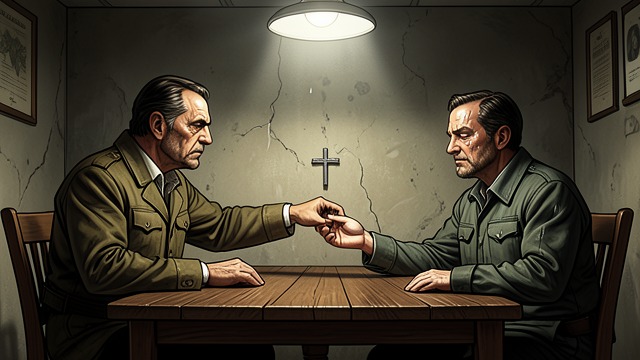
The Magistrate’s Question
Motive Demanded
The magistrate presses Meursault to explain the pause between his first and later shots. Meursault can describe heat and sensation, but he cannot produce the moral motive the official expects.
Religious Interruption
The Crucifix appears when ordinary explanation fails. The magistrate’s faith turns the inquiry from facts toward repentance, making Meursault’s unbelief part of the prosecution’s eventual portrait.
Prisoner Adaptation
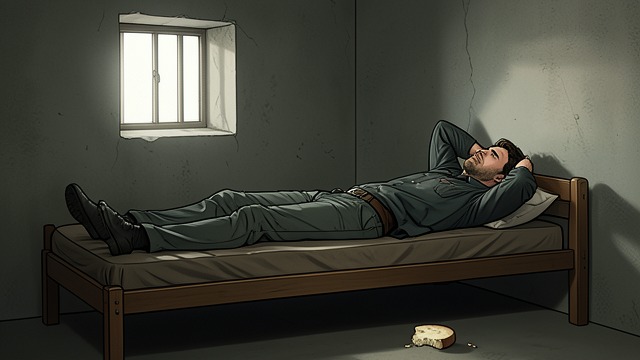
Prisoner Adaptation
Lost Freedom
The Prison removes cigarettes, movement, sexual contact, and access to Marie Cardona. At first Meursault thinks like a free man and suffers through imagined beaches and ordinary habits.
New Measures
He learns to survive through memory, sleep, and repetition. Imprisonment becomes less a dramatic event than a daily condition that consciousness gradually absorbs.
Trial Construction
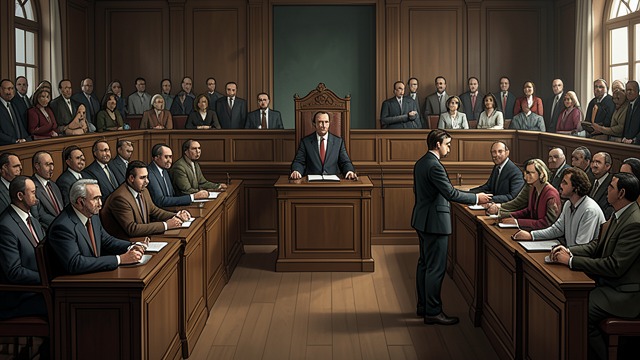
Trial Construction
Public Spectacle
The courtroom is crowded because newspapers have made Meursault’s case a summer story. He feels like a gate-crasher while journalists, lawyers, and jurors perform the rituals of communal judgment.
Character on Trial
Witnesses discuss the funeral, coffee, cigarettes, and Marie Cardona’s laughter. The legal hearing shifts from the Arab’s death to whether Meursault has displayed acceptable human feeling.
Death Sentence

Death Sentence
Verdict
The court declares Meursault guilty and orders public decapitation. The judgment treats his funeral behavior as proof that he was criminal at heart, binding private nonconformity to public punishment.
Mechanical Finality
The sentence becomes real through its procedures, not through moral certainty. Meursault begins thinking about the “implacable machinery of justice” as an apparatus that converts contingency into irreversible fate.
the week after the shooting
early pretrial examination
the first six months in prison
the first day of the Assize Court trial
the final afternoon of the trial
